
Pipe Repair and Burst Pipes
Leaks, frozen and burst pipes and old supply lines replaced, with every new line pressure-tested before the walls close.
Burst Pipe: Do This First
A burst pipe is the most common plumbing emergency in Northeast Ohio. Water damage grows by the minute, so work through these steps in order:
- Shut off the main water valve. Turn it clockwise until it stops. A lever valve turns a quarter turn, until the handle sits across the pipe.
- Open the lowest faucet in the house, such as a basement laundry tub, to drain the water still in the pipes.
- Turn off the water heater: set the gas control to pilot or switch off its breaker, so it does not heat an emptying tank.
- Move belongings out of the water's path and away from wet ceilings. Stay out of standing water near outlets or appliances.
- Call Botzum Plumbing at (330) 548-2855 and tell us where the water is coming from.
How Winter Freezes Pipes Here
Cuyahoga Falls winters bring runs of nights well below freezing, and the cold reaches pipes wherever the house is not heated: along the rim joist at the top of a basement wall, in crawl spaces, in garages, in kitchen sink lines that run up an outside wall, and at outdoor spigots that were never shut off from inside. Older houses with stone or block foundations and little insulation lose the most heat in those spots.
Water expands as it freezes, and the pressure builds between the ice and a closed faucet. The split often shows up only when the pipe thaws, which is why a burst pipe is so often found in the afternoon after a cold night. Keeping cabinet doors open on outside walls, letting a faucet drip on the coldest nights and insulating exposed lines all help, and so does working through a seasonal maintenance checklist each autumn.
Pipe Materials in Older and Newer Homes
What a house is plumbed with says a lot about what fails next.
| Material | Where found in older vs newer homes | Common problems |
|---|---|---|
| Galvanized steel | Common in houses built before about 1960; rare in newer ones | Rusts from the inside and narrows; low pressure, brown water, leaks at threaded joints |
| Copper | The usual supply pipe from the 1960s into the 2000s; still used | Pinhole leaks, green corrosion at joints, splits when water freezes in it |
| PEX | Most new homes and most repipes of the last twenty years | Fittings fail if poorly crimped; damaged by sunlight before install; rodents chew it |
| CPVC | Some homes and additions from the 1980s on | Turns brittle with age and cracks if bumped; glued joints can let go |
| Polybutylene | Gray plastic supply pipe in some homes from the late 1970s to mid-1990s | Breaks down from the inside; pipe and fittings can fail without warning |
Signs of a Hidden Leak
Not every leak drips where you can see it. Watch for:
- A water bill that rises with no change in how you use water.
- Damp or stained drywall, bubbling paint, or a soft spot in a floor.
- A musty smell in a closet, cabinet or one corner of the basement.
- The sound of running water when every fixture is off.
- The leak indicator on the meter turning while nothing is running.
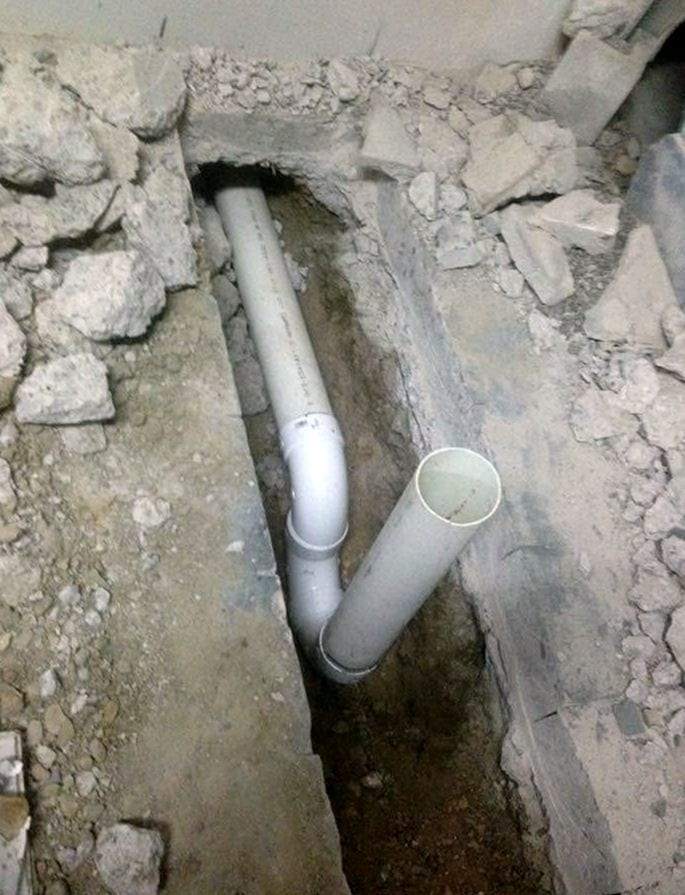
Drain pipes leak too. Under a basement slab a broken drain can go unnoticed for years until the floor drain starts backing up; that kind of repair means opening the floor, replacing the damaged section and patching the concrete.
Repiping
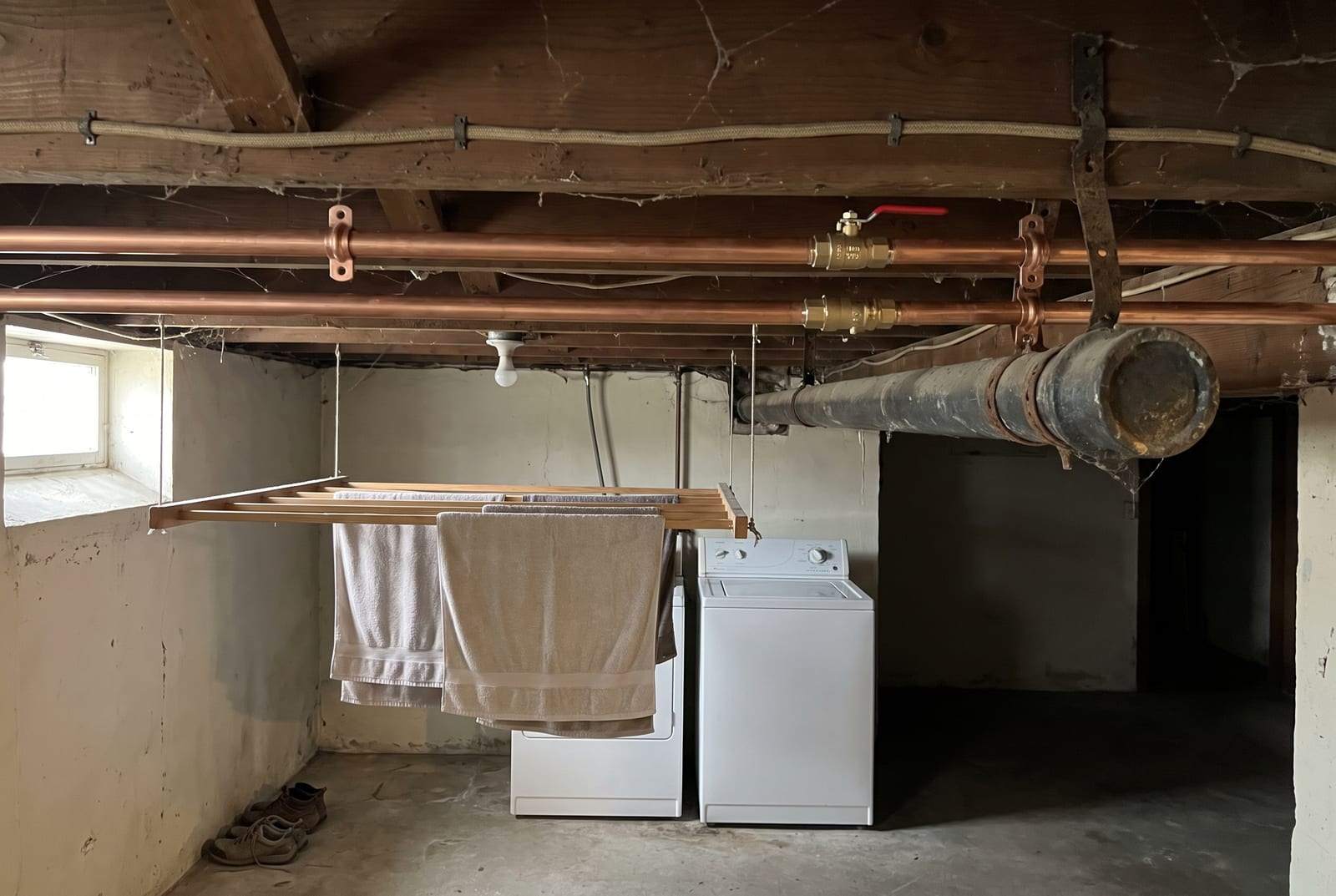
When patches keep piling up, replacing the supply lines is often the better plan. A repipe runs new lines from the main shutoff to each fixture, usually in copper or PEX, with shutoff valves where they make sense. Before any wall or ceiling is closed, the new system is pressure-tested and the gauge watched to make sure it holds.
Pipe Questions
What should I do if my pipes freeze?
Open the faucet the frozen pipe feeds, so melting water has somewhere to go, and find the main shutoff in case the pipe has split. If you see water or hear spraying once it thaws, shut the main off right away and call.
How do I thaw a frozen pipe safely?
Warm the pipe slowly, starting at the faucet end and working back: a hair dryer, a space heater kept well away from anything that burns, or towels soaked in hot water. Never use an open flame or a torch. If you cannot reach the frozen section, or it sits inside a wall, call us.
When is repiping worth considering?
When the pipe is the problem rather than one joint: galvanized lines that have rusted down to a trickle, polybutylene, or copper that has sprung its third or fourth pinhole leak. Patching those keeps costing visits. A repipe replaces the supply lines in one planned job, and every new line is pressure-tested before walls are closed.
Can you find a leak without opening walls?
Often we can narrow it down first: checking the meter with every fixture off, listening along the lines, and looking for the lowest damp spot, since water runs downhill along pipes and framing. Some leaks still need a small opening to reach, and we keep it as small as the repair allows.
A burst or leaking pipe? Shut off the main and call us.