
Drain Cleaning in Cuyahoga Falls
Slow sinks, backed-up floor drains and main line clogs cleared, and the cause found when a clog keeps coming back.
Drain cleaning is one of the calls we get most in Cuyahoga Falls. Most are a single slow fixture: a kitchen sink full of grease, a tub drain packed with hair, a toilet that will not flush clear. Others are the main line, where every drain in the house slows down and the basement floor drain is the first to back up.
We clear the line, then run water long enough to confirm it carries away freely. When a drain has clogged more than once, we look for the reason, because a clog that keeps returning usually has a cause in the pipe itself.
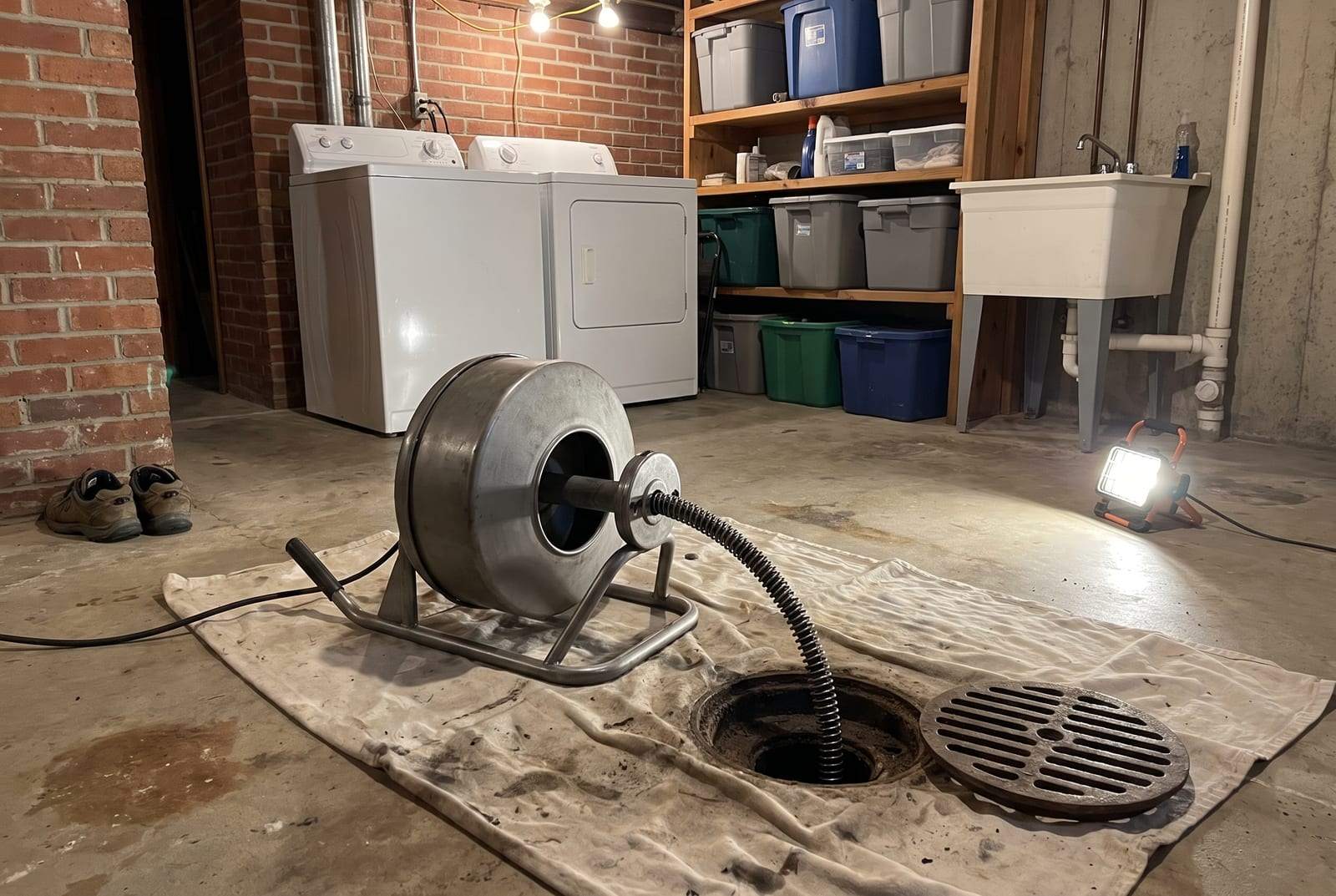
Drains, What Clogs Them and How They Are Cleared
| Drain | Common causes | Typical method |
|---|---|---|
| Kitchen sink | Grease, food scraps, coffee grounds, disposal sludge | Cable through the trap arm; jetting when grease coats the line |
| Bathroom sink | Hair, soap and toothpaste caught on the pop-up stopper | Clean the stopper and trap; small hand cable |
| Tub or shower | Hair and soap scum in the trap and drain body | Cable through the overflow or drain; trap cleaned |
| Toilet | Wipes, paper towels, toys, too much paper at once | Closet auger; toilet pulled if the object is lodged |
| Basement floor drain | Laundry lint, sediment, or a main line backing up | Cable, then a camera if it backs up when laundry runs |
| Laundry standpipe | Lint and fabric fibers, an undersized drain | Cable; check the pipe size and venting |
| Main line | Roots at old joints, sagging pipe, grease buildup | Large cable machine, jetting, camera inspection |
Snaking vs Hydro-Jetting
Both clear a blocked line. They differ in what they leave behind.
Snaking (cable machine)
- A rotating steel cable cuts or hooks the clog.
- Works on almost every drain, from a sink to the main line.
- Opens the line quickly, but can leave grease or roots on the pipe walls.
- Safe for fragile old pipe when the right cable size is used.
Hydro-jetting
- High-pressure water scours the full inside of the pipe.
- Best for grease buildup, sludge and fine root growth.
- Keeps the line clear longer after a repeat clog.
- Not for pipe that is already cracked or badly corroded; a camera look comes first.
Signs the Clog Is in the Main Line
One slow drain is usually its own problem. These signs point past the fixture to the main line or the sewer lateral:
- More than one fixture is slow at the same time, especially on the lowest floor.
- The basement floor drain backs up when the washer drains or a toilet flushes.
- Water rises in the tub when you flush the toilet.
- Toilets and drains gurgle when water runs somewhere else in the house.
- A sewage smell comes up from the floor drain or the cleanout.
- Plunging one fixture makes water come up in another.
In older Cuyahoga Falls neighborhoods, mature maples and oaks along the street send roots into clay and cast iron sewer joints, and a main line that backs up every year or two often has roots growing at one of them; a camera inspection of the sewer line shows which.
What Not to Pour Down a Drain
- Cooking grease, bacon fat and oil, even when hot and liquid.
- Coffee grounds and eggshells.
- Rice, pasta and potato peels, which swell and pack in the trap.
- Flushable wipes, paper towels and cotton swabs (in a toilet, only toilet paper).
- Paint, joint compound and grout rinse water.
- Chemical drain openers.
Drain Questions
Why does my sink drain slowly even after I cleared it?
A plunger or a store-bought tool often punches a small hole through a clog and leaves the rest on the pipe wall. Water runs again for a while, then slows as new debris catches on what is left. Clearing the full diameter of the pipe, or jetting it clean, lasts much longer.
What causes clogs that keep coming back?
Repeat clogs usually point to something in the pipe itself: roots growing into a joint, a belly where the pipe has sagged and holds water, a broken section, or heavy grease buildup. A camera inspection shows which one it is so the fix addresses the cause.
Why do my drains gurgle?
Gurgling means air is being pulled through the water in a trap. A partial clog downstream or a blocked vent pipe on the roof are the usual causes. If several fixtures gurgle when a toilet flushes or the washer drains, the trouble is usually in the main line.
Are chemical drain cleaners safe to use?
We do not recommend them. They rarely clear a solid clog, the heat they make can soften plastic pipe and eat at old metal, and they leave caustic water in the line for whoever opens it next. If you have already poured one in, tell us before we start so we can protect ourselves and your fixtures.
A drain that keeps backing up is worth a call before it overflows.